
Kitchen and bathroom countertops are among the most searched categories in natural stone — and among the most demanding. A countertop sees daily use, so the material, the finish, and the fabrication all have to hold up to more than a showroom photo. This guide covers what to consider when sourcing marble for a countertop project, and how North Star Marble supports custom fabrication for contractors, fabricators, and designers.
Marble or Porcelain?
Countertops are typically made from one of two materials: natural marble or marble-look porcelain. Porcelain is the more durable option — it resists scratches, stains, and heat better than natural stone over time. Marble makes a different case. It doesn’t claim to be the most practical surface; it claims to be solid and striking. A marble countertop brings a luxury identity to a space, with veining and depth that no printed surface fully replicates. The choice comes down to how a kitchen or bathroom will be used, and what character the space is meant to have.
Choosing the Right Marble for a Countertop
Marble is composed largely of calcium carbonate, which makes it reactive to acids and sensitive to sustained heat. This matters for a countertop far more than it does for flooring or wall cladding, because a kitchen surface is in daily contact with food acids (citrus, wine, vinegar) and hot cookware. Once a marble surface etches or scars from that exposure, it typically can’t be re-polished in place — the fix requires professional refinishing, not a quick wipe-down.
For a countertop that needs to hold up over years of daily use, we recommend denser, less porous marble varieties: Calacatta Viola, Calacatta Gold, Calacatta Verde, Carrara White, Lilac, Rosso Levanto, Fendi Blue, Afyon White, and the Onyx range. These hold up better against everyday kitchen wear.
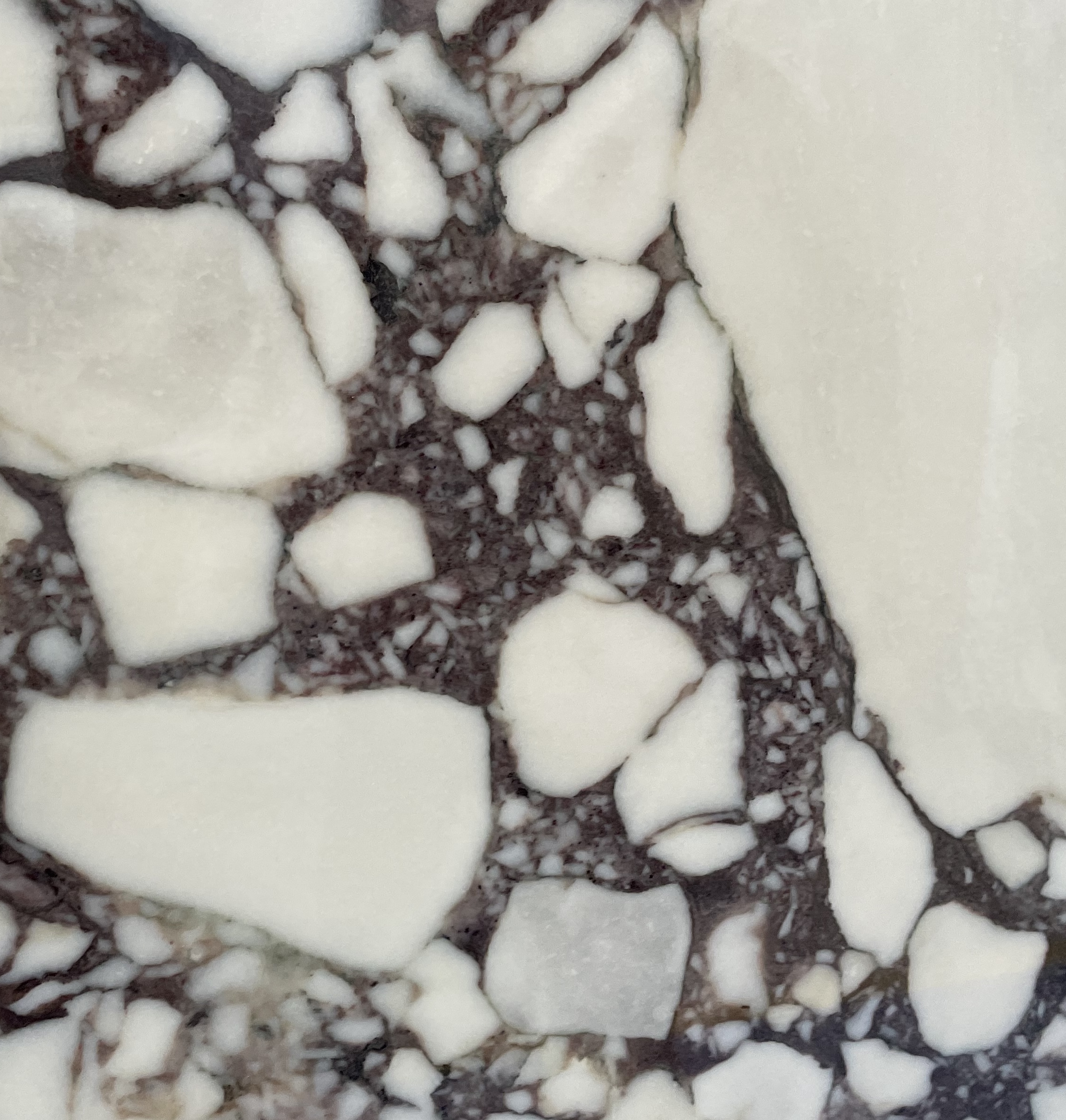
Other varieties — including Crema Marfil, Emperador, Botticino, Tundra Grey, Satin Spider, Vanilla White, King Beige, Alexander Black, Muğla White, Rosso Venato, Crema Uno, and Bruno Perla — are more vulnerable to acid and heat damage and are better suited to applications other than a daily-use countertop.

With beige-toned varieties in particular, the color and pattern of the stone tend to visually mask staining better than a plain white surface would — though the reaction is still happening underneath. As an example, Rosso Venato will yellow on contact with lemon juice, while Tundra Grey shows the same reaction far less visibly. In general, beige-toned marbles react to fruit acids and prolonged heat and can develop visible staining over time.
If you do choose one of these for a countertop, we strongly recommend applying a protective sealant or a clear film coating. A sealant should be reapplied every 3–6 months. Film coating holds up well on countertops and tables, but we don’t recommend it for bathroom floors or other wet areas — it can make the surface slippery underfoot, which is a safety risk rather than a cosmetic one.
Marble is a natural material, and like any natural material it will show wear over time. The more carefully it’s used and maintained, the longer it keeps its original beauty.
Kitchen Countertops
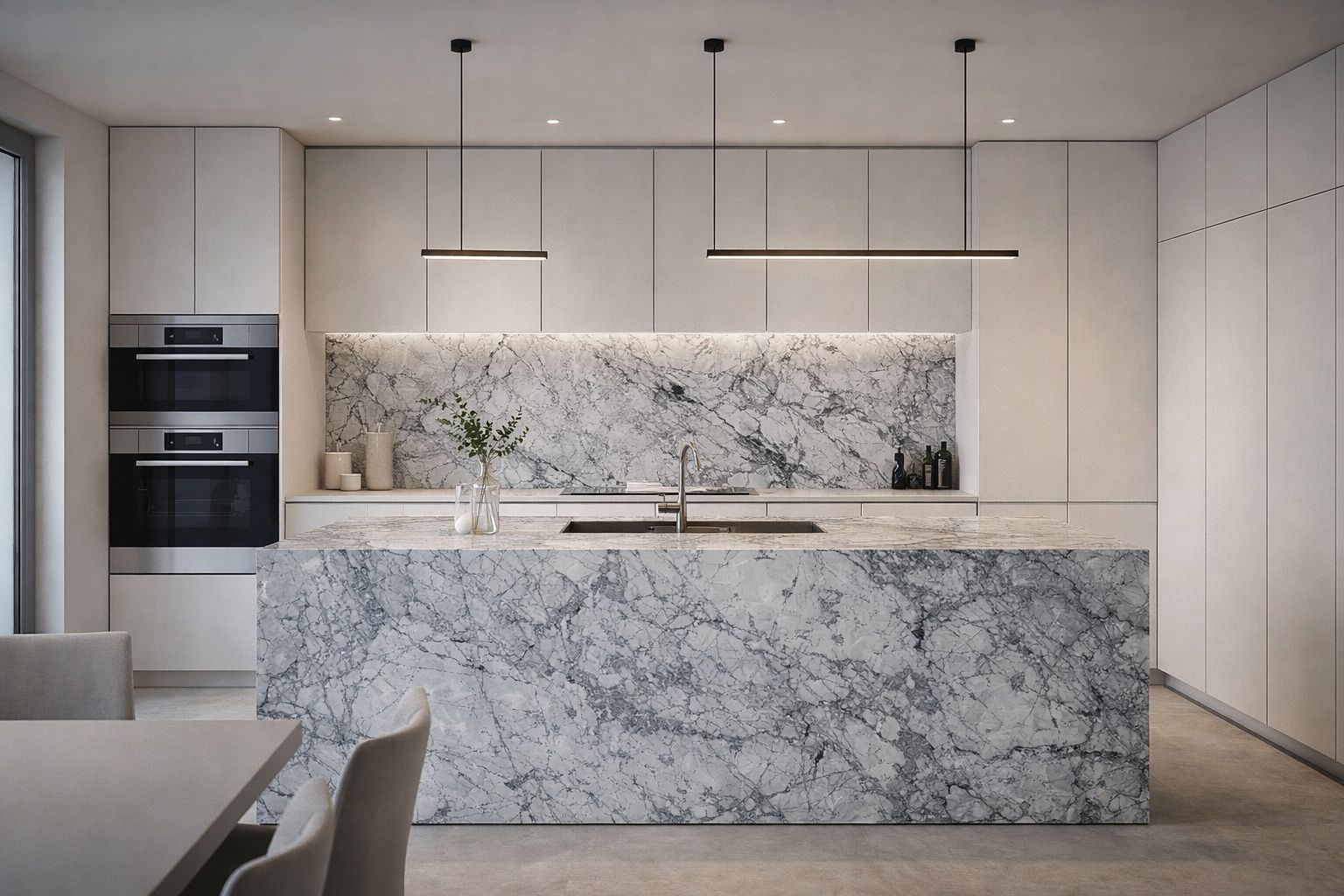
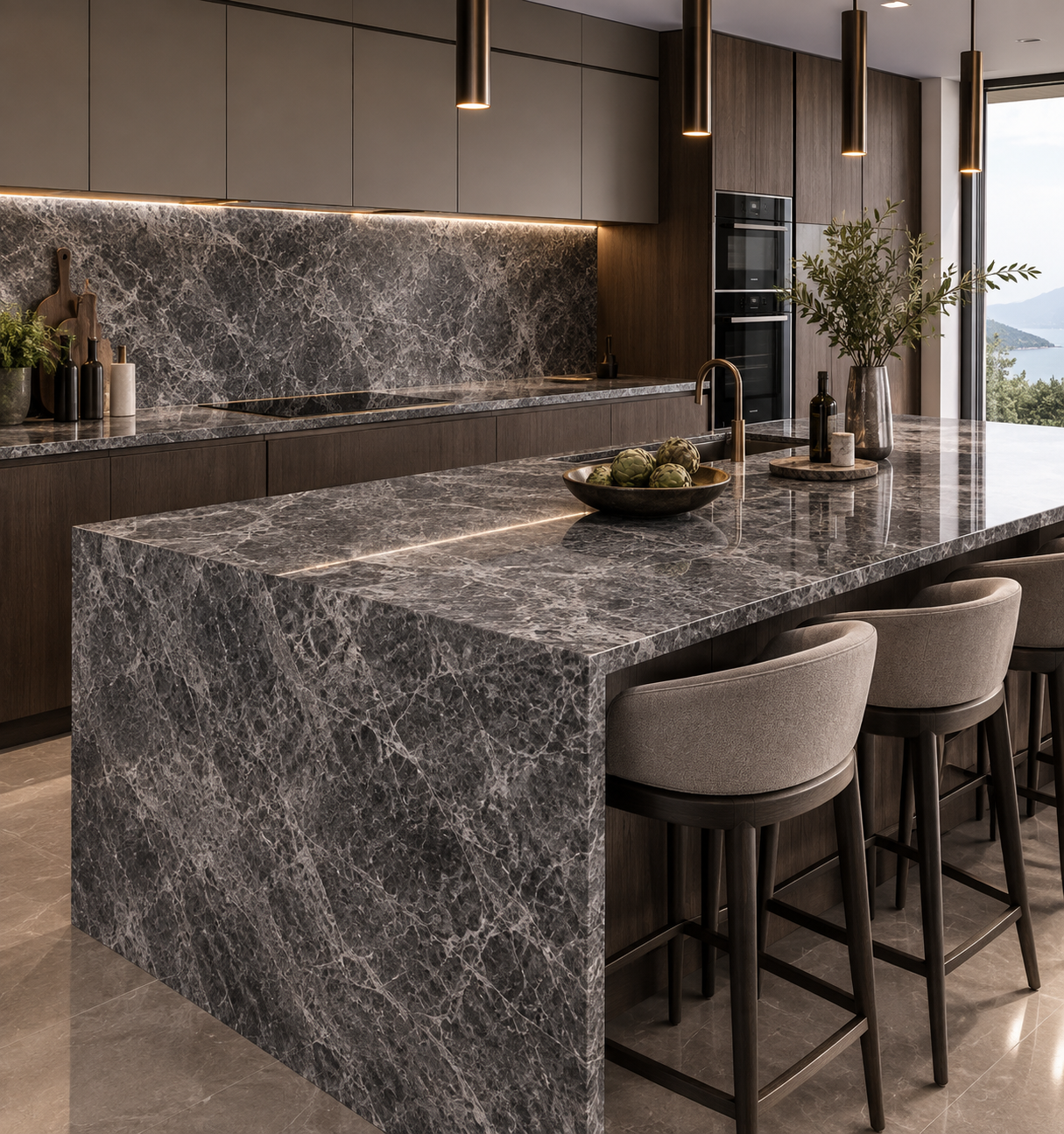
In kitchens, marble is most often used for islands, waterfall edges, and backsplashes — areas where the veining is on full display.

Bathroom Vanity Countertops
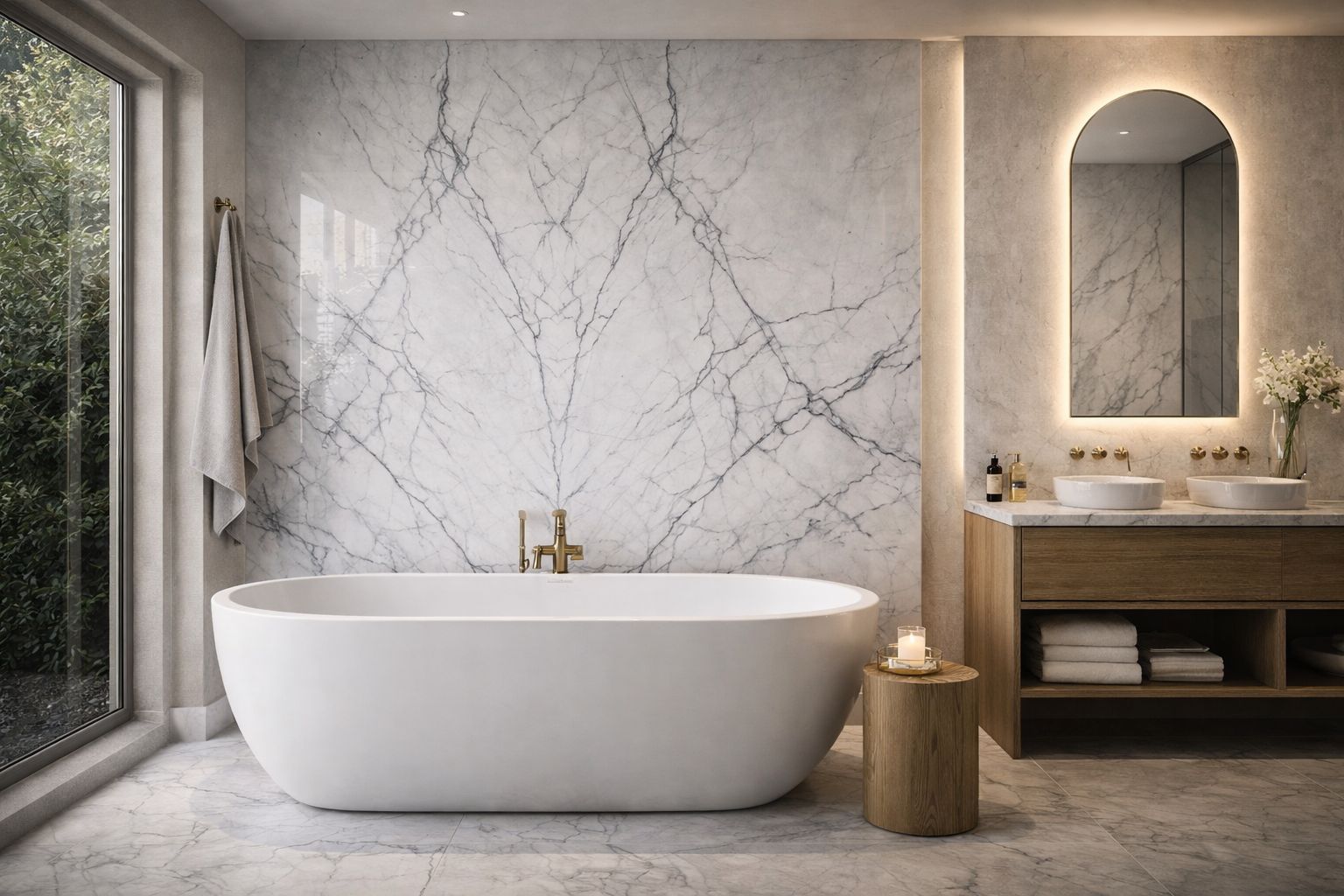
The same material logic applies to bathroom vanities — a marble countertop and matching wall panel turn a functional sink area into a considered part of the room.
Slab Selection and Pre-Shipment Verification
A countertop is typically cut from a single slab — a slab is one large piece of stone, roughly 5–6 m², which is enough surface area for a standard countertop in one continuous piece. Only for very large islands or long uninterrupted runs would a project need more than one slab from the same block — in which case vein and tone matching between slabs becomes important.
Before confirming an order, buyers should verify:
- Slab selection — veining and tone should be chosen against the actual kitchen or bathroom layout, not a generic sample.
- Finish — polished for a reflective, formal look, or honed for a matte, softer surface that shows fewer fingerprints and light scratches.
- Edge and cutout requirements — sink cutouts, waterfall edges, and any seam placement all need to be confirmed against the actual layout.
- Verification before shipping — a pre-shipment check of slab tone and finish catches mismatches before they reach the job site.
Custom Projects
Countertop orders are rarely off-the-shelf. Every kitchen or bathroom has its own layout, sink position, and edge profile, which is why we treat countertop work as a custom project rather than a standard catalog item. Marble countertops can be produced to your required size and specification. Send us your layout and stone preference, and we’ll work with you on slab selection, cutting, and quality verification before the order ships — acting as your inspection and sourcing partner from block through to the finished piece.
For a price quote, email us at info@northstarmarble.com
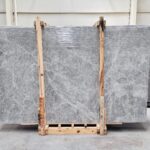
How Marble Slabs Are Packed for Export
Vanilla Marble Collection: Vanilla White, French Vanilla and Vanilla Ice