How Marble Slabs Are Packed for Export
Packing is the stage buyers think about least and pay for most. A container of marble that was cut well, finished well and selected honestly can still arrive with broken slabs, and when it does the argument that follows is rarely settled to anyone’s satisfaction.
This guide explains how marble slabs and tiles are actually packed for export, what a bundle contains, and what you can check before your material is loaded.
What a Bundle Is
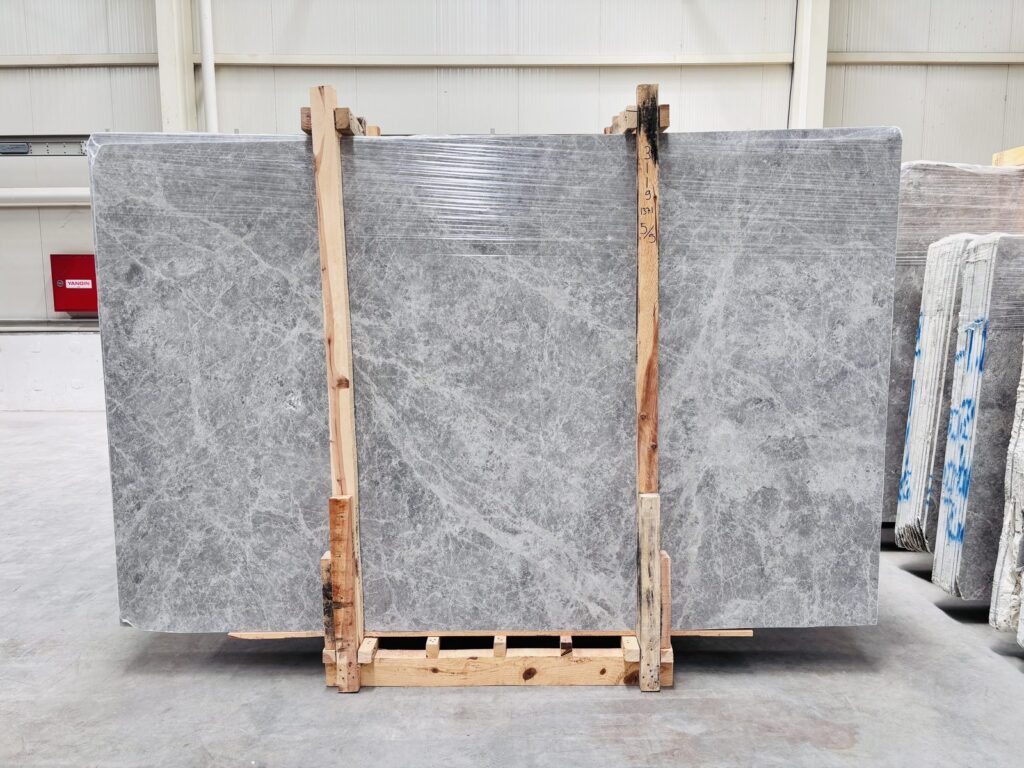
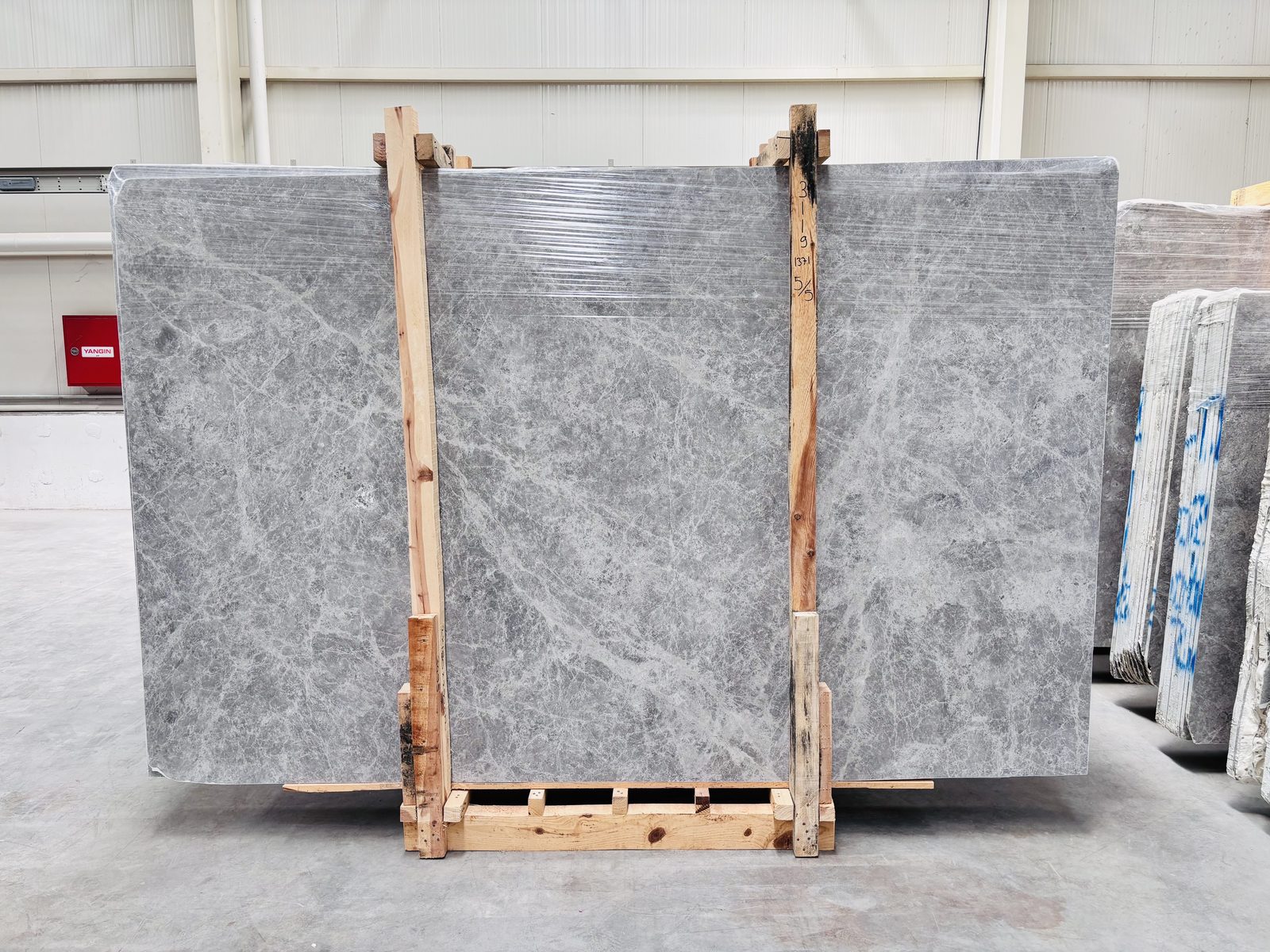
Slabs are not shipped individually. They are assembled into bundles – in Turkish, bandil – built from timber battens of 10 x 10 cm and 5 x 10 cm. The slabs stand on edge, supported front and back, and the timber frame carries the stress of being moved instead of the stone.
The count inside a bundle is standardised, and it is worth committing to memory:
- 2 cm slabs – 12 slabs per bundle
- 3 cm slabs – 8 slabs per bundle
Why the Count Matters to You
Verifying quantity. You can count bundles far more easily than you can count slabs, and bundle count multiplied by the standard figure gives you an immediate check against the packing list. A discrepancy is visible before the doors close.
Planning the container. Bundle count and slab thickness together determine how much you can load. A container can run out of weight allowance or run out of space, and which limit you reach first depends on the thickness and the quantity – so both need checking before you commit to a quantity.
Matching material. Slabs from the same block are bundled in sequence. If your project depends on vein continuity or bookmatching, the integrity of that sequence matters more than the total quantity – and it is the first thing lost when bundles are broken up and repacked.
Where Damage Actually Happens
In our experience the majority of transit breakage does not come from the sea voyage. It comes from three moments on land:
Bundle assembly. Slabs stacked without adequate support between them, or a timber frame that is undersized for the weight it is carrying.
Standing in the storage yard. Bundles are moved and stacked by crane, and they wait in the yard until a container is arranged. Slabs can crack while they are being set down and stored, and the damage sits in the middle of the bundle where nobody sees it until it is opened at the other end.
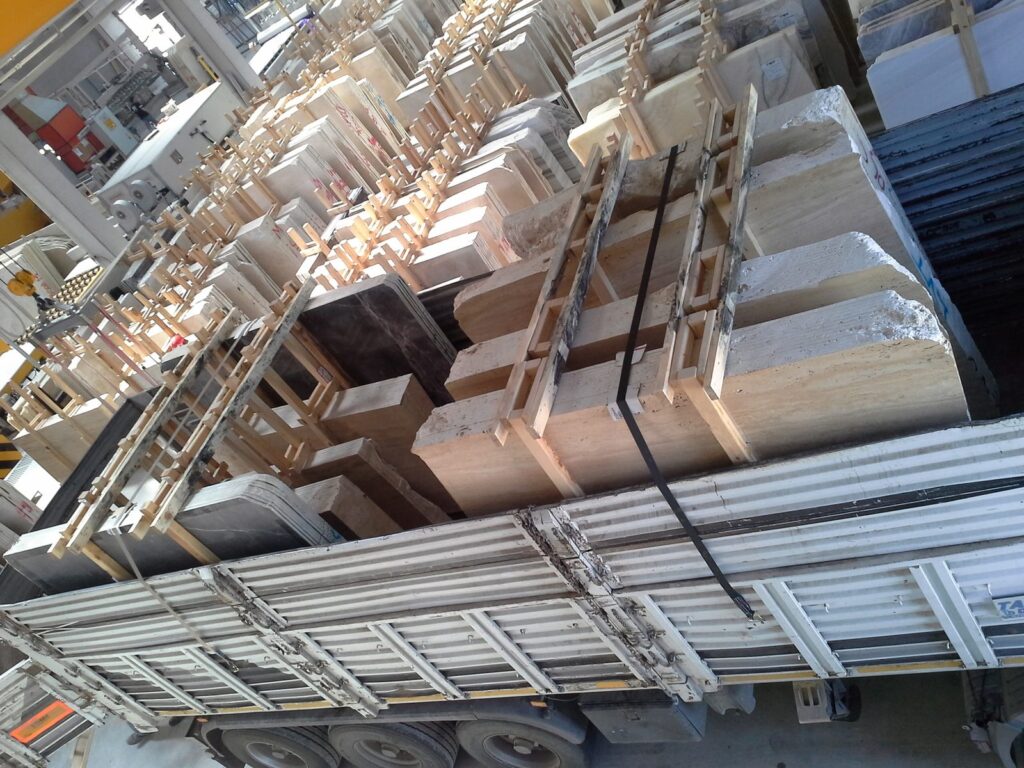
Loading the container. The second point where breakage occurs. Bundles that are not secured against movement will shift, and a container is not a static environment – it is lifted twice, driven, and moves at sea.
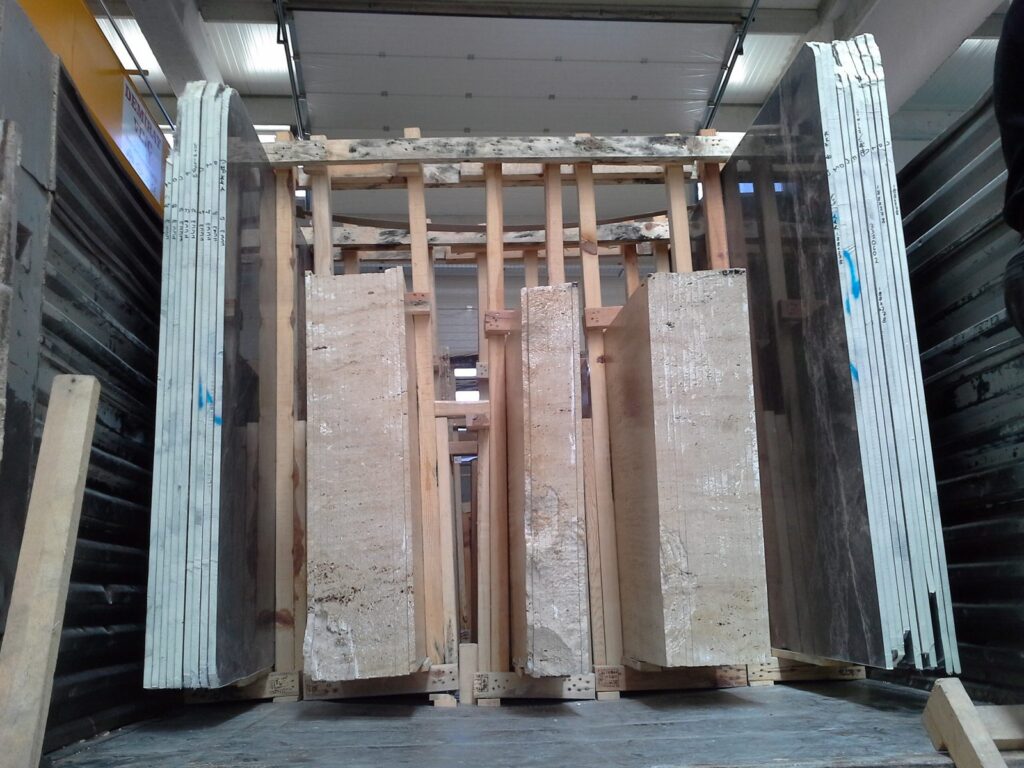
The pattern to notice is that all three happen while the material is being moved or stored, not because the packaging material itself was wrong. Better timber does not compensate for a bundle that has been set down badly in the yard.
Tiles Are Different
Cut-to-size tiles go through selection and are packed into crates rather than bundles. The selection stage and the packing stage happen effectively together – someone is grading the material as it goes into the crate.
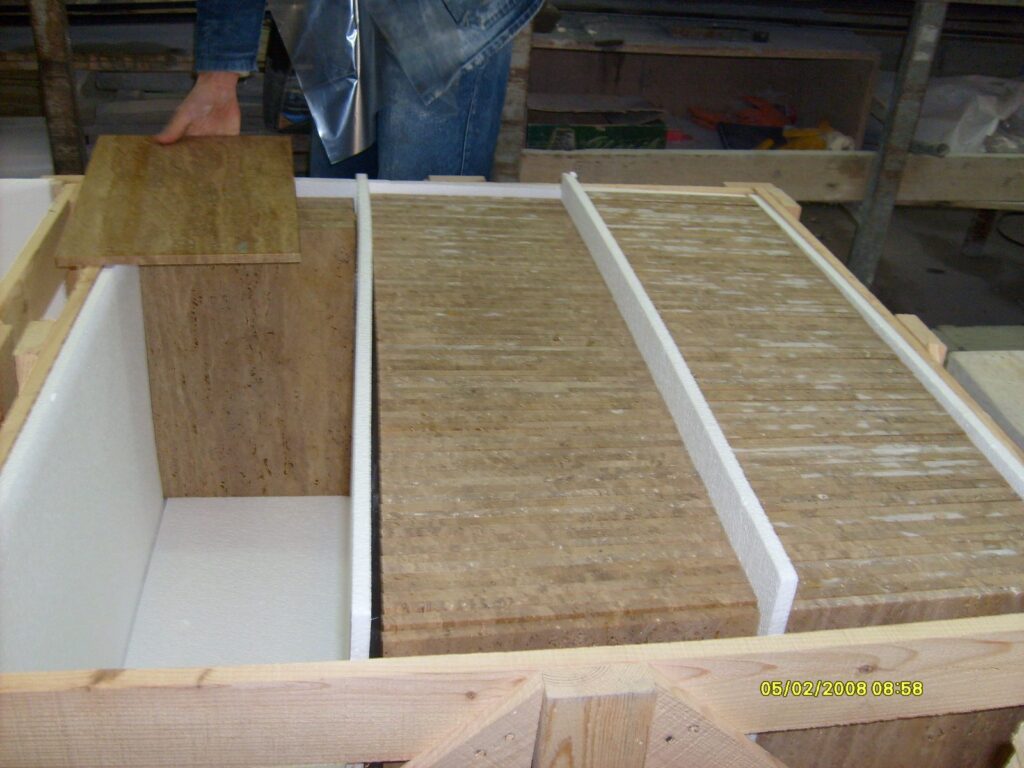
This makes tile packing a point of real leverage for a buyer. The person deciding what is acceptable is deciding it at the moment of packing, which means an inspector present at that table changes the outcome in a way that inspection after the fact cannot.
What to Check Before Loading
- Bundle count against thickness. Does 2 cm material carry 12 slabs, and 3 cm material 8?
- Timber condition. Sound battens, correctly dimensioned, properly fixed. Reused timber with old nail holes is a warning sign.
- Sequence integrity. Are slab numbers running in order within the bundle? This is critical on bookmatch material.
- Support between slabs. Are the faces protected where they meet, or resting directly against each other?
- Bundle stability. Does the assembly hold together when it is moved, or does it flex?
- Container securing. Are bundles braced so they cannot shift in transit?
- Photographic record. Photographs of the loaded container before the doors close. If a claim becomes necessary later, this is the evidence that decides it.
The Claim Problem
Here is the practical reality of damage claims: once a container has been opened at destination, establishing where the damage occurred is close to impossible. The supplier will say the slabs left intact. The shipping line will say the container was sealed. You will have broken stone and no way to prove which of them is right.
This is why documentation before loading is worth more than any argument after it. A photographic record of bundles and container loading, taken by someone independent, converts a dispute into a fact.
If you are importing marble from Turkey and want your loading documented before the container is sealed, that is part of what our inspection services cover. Our slab inspection guide covers the checks that come before packing, and how marble is made sets the packing stage in the context of the whole production chain.