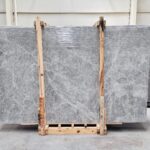
How Marble Is Made: From Quarry Block to Finished Slab
Most buyers meet marble at the end of its journey: a polished slab standing in a warehouse, or a photograph in an email. Everything that determined how that slab looks – its colour, its vein direction, whether it will survive being moved and loaded – was decided much earlier, in a quarry and on a factory floor.
This guide follows the whole chain, from the rock face to the crate. It is written for people who buy stone rather than produce it, because understanding the sequence tells you where quality is won and lost, and what questions are worth asking your supplier.
1. The Quarry
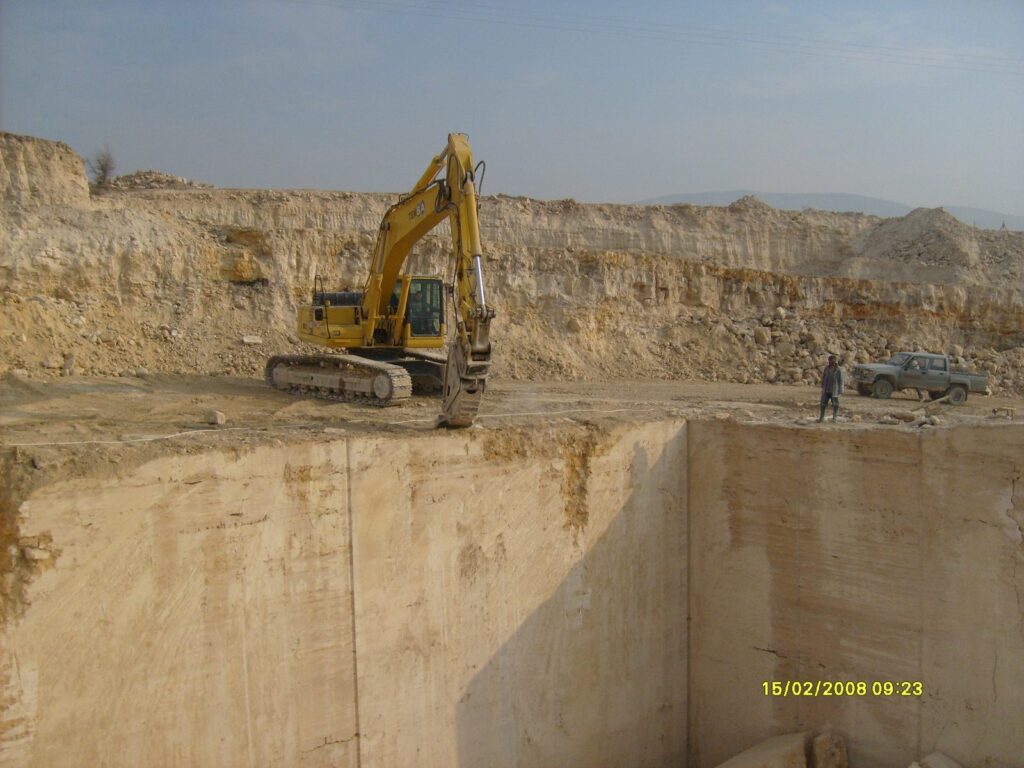
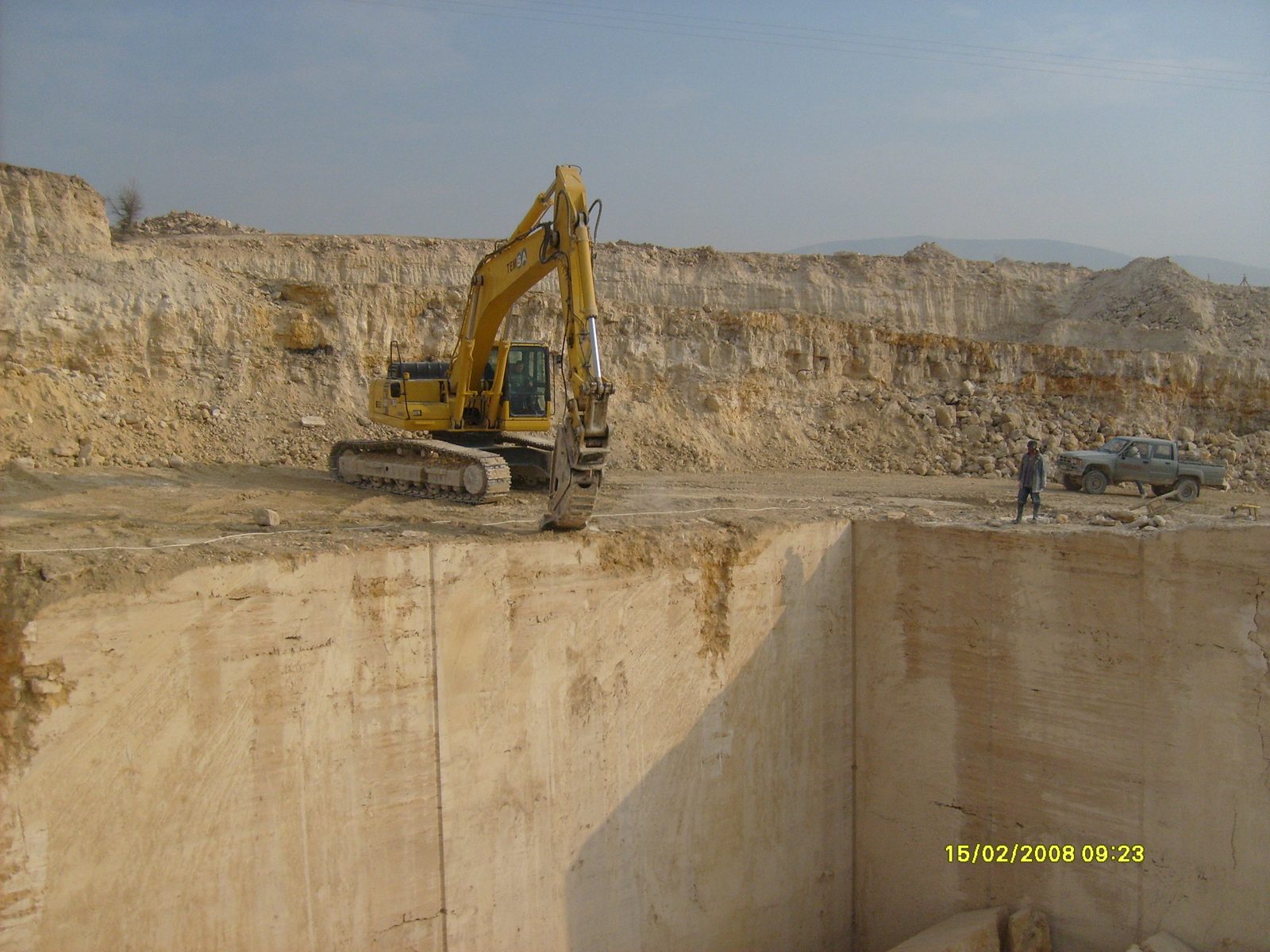
A quarry is simply the place where marble is taken out of the ground. Two things come out of it: blocks – solid, broadly prismatic pieces of stone – and irregular blocks, the pieces that are too small or too misshapen to be sold as blocks in their own right. Both have a use, and we will come back to the irregular material later.
The one point worth holding onto here as a buyer: a quarry’s geology governs how consistent its output can be. A deposit with dramatic layering will not produce the same colour from one bench to the next, however well it is managed.
2. Cutting the Block
Extraction methods have changed considerably. The older approaches – hand tools, channelling, drilling a line of holes, and explosives – have largely given way to mechanical cutting:
- Diamond wire cutting – holes are drilled into the rock face and a diamond wire is threaded through them to cut the mass. This is the dominant method today.
- Chain arm cutting – a machine built specifically to produce blocks with clean geometry.
- Diamond belt arm and helical wire – older or more specialised mechanical methods.
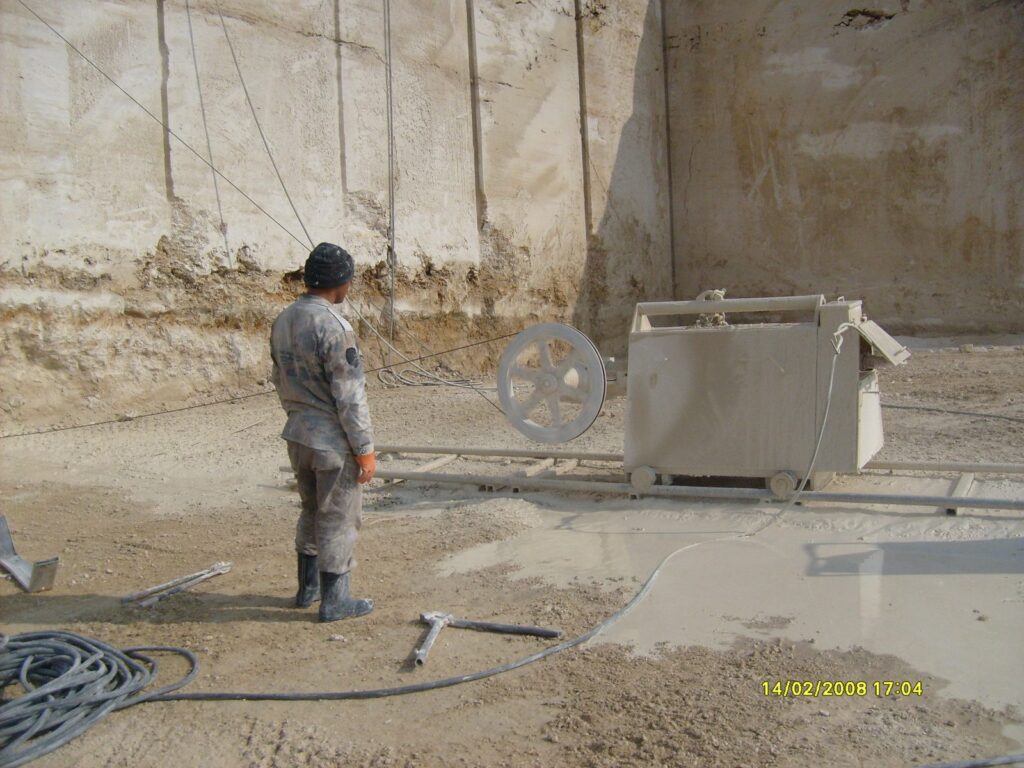
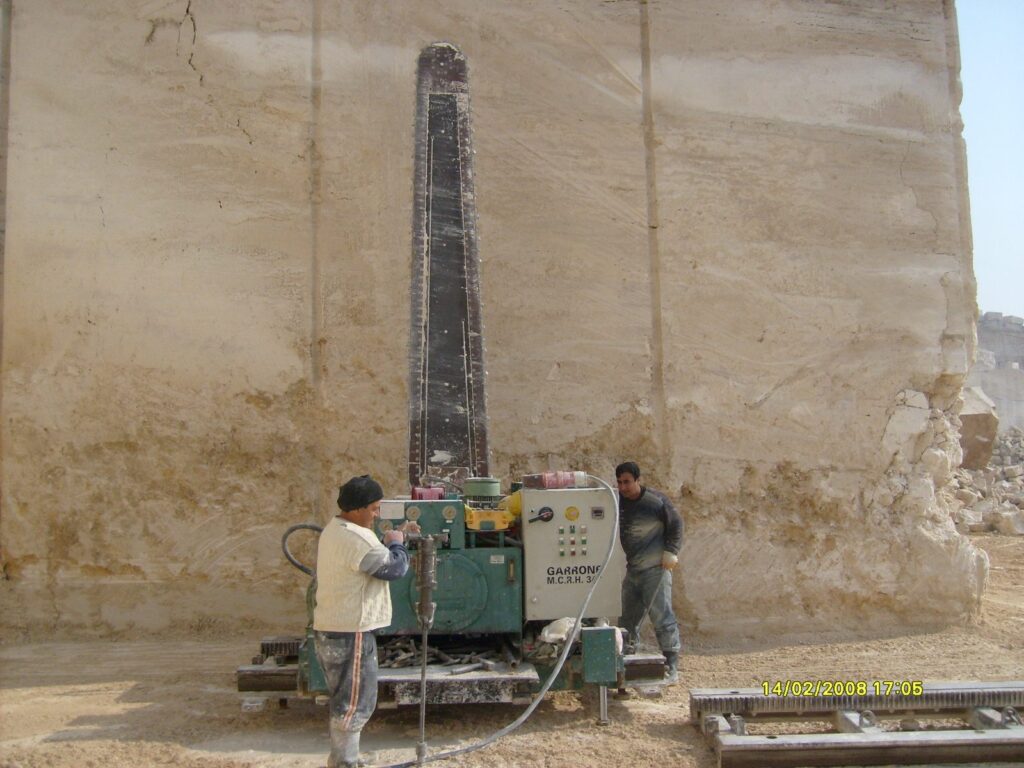
Why this matters to a buyer: cutting method affects block geometry, and block geometry affects yield. A block with square, true faces produces more sellable slabs than one that has to be trimmed heavily before it can go on the saw.
3. Separating and Sizing the Block
Once the cut is complete, the block still has to be freed from the parent rock. This is done with separating equipment – hydraulic wedges, air cushions, or the hydraulic attachment mounted on an excavator arm.
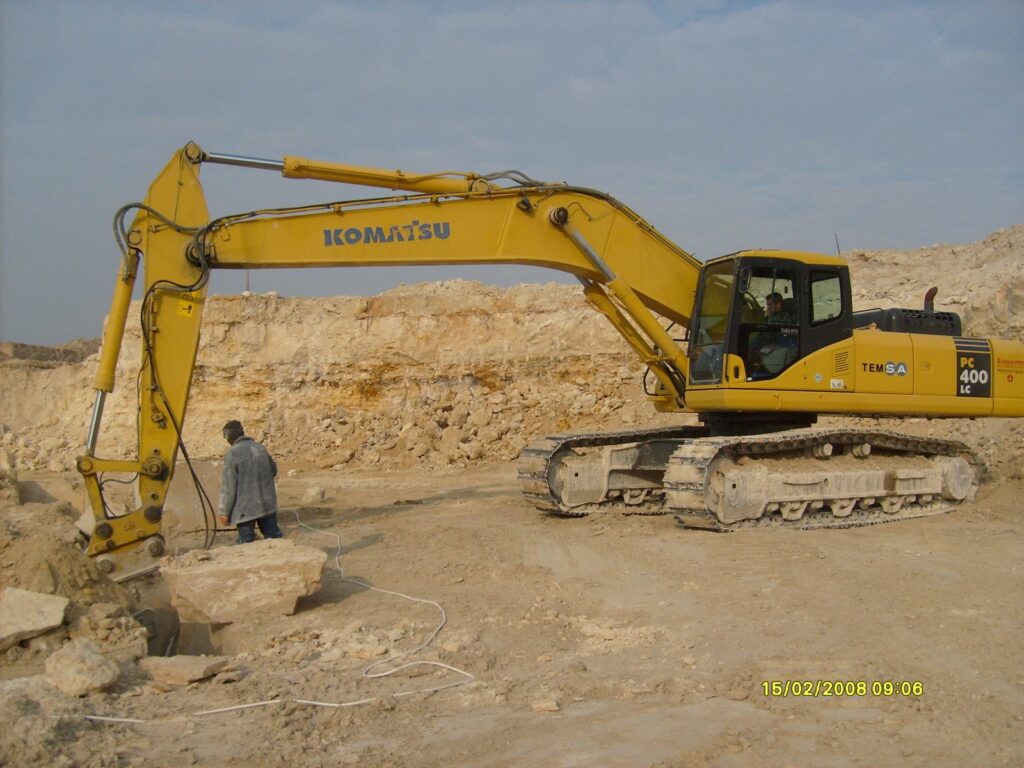
Blocks as they come off the face are frequently irregular and far too large to transport. So they are cut a second time. In the trade this is called squaring: bringing the block to a shape and size that can be loaded, shipped and fed into a gangsaw.
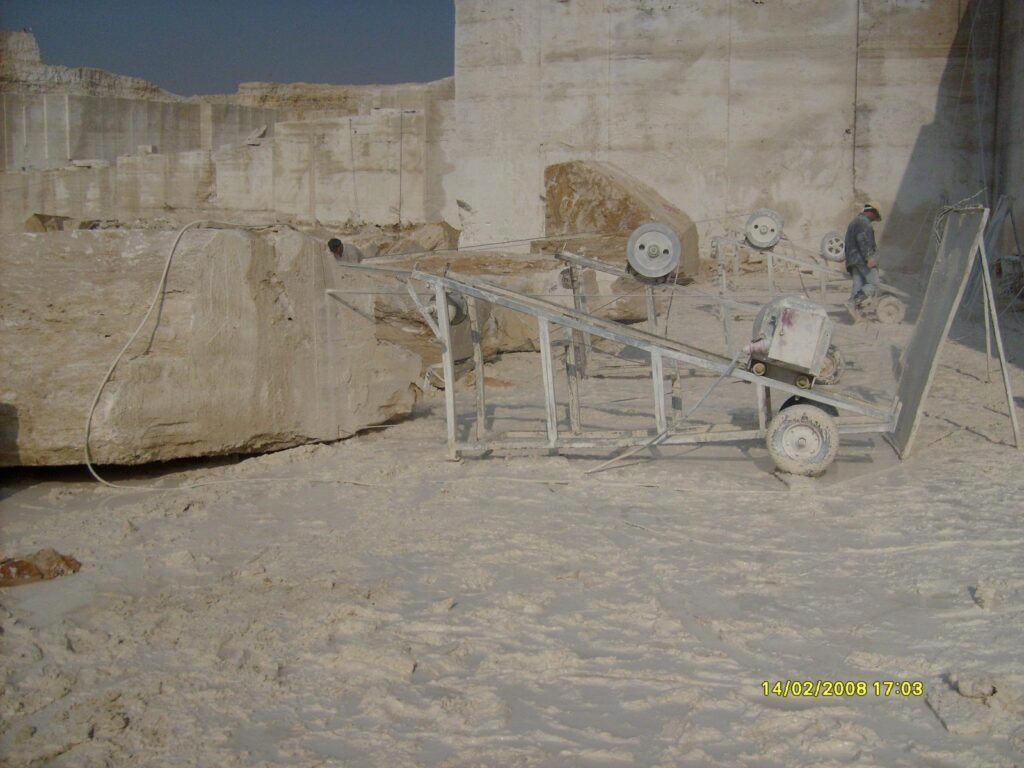
Squaring is where an experienced eye earns its keep. Cut too conservatively and you ship stone that will be trimmed off anyway; cut too aggressively and you lose slabs you could have sold.
4. Transport to the Factory
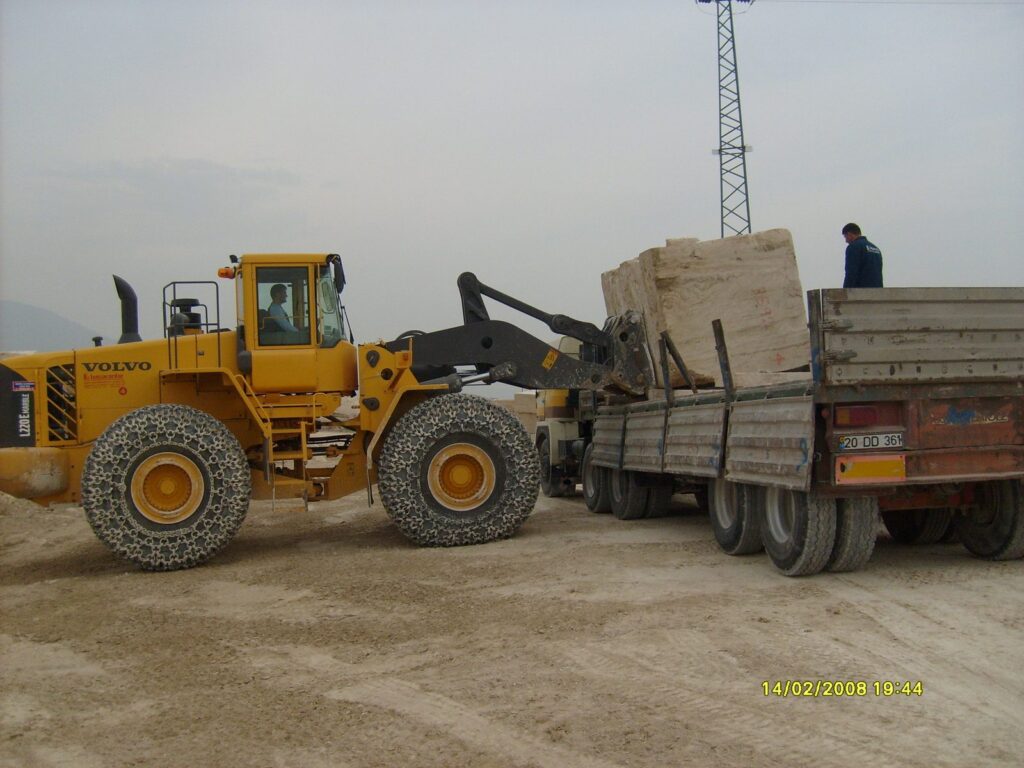
Squared blocks are loaded by wheel loader onto trucks and taken to the factory. Straightforward in principle – but blocks are damaged during moving and loading more often than most buyers realise, and a crack introduced at this stage will not reveal itself until the block is on the saw.
5. Reinforcement Before Cutting
At the factory, the first decision is whether the block needs strengthening before it is cut.
Travertine and true crystalline marbles can often go straight to the saw. Beige group marbles almost always need treatment first – epoxy and fibreglass mesh, applied by one of several methods, after the block has been dried in an oven.
Skipping this stage on the wrong stone means slabs that crack on the polishing line and a block that yields nothing. We have covered this in detail in why marble blocks are reinforced with epoxy and mesh.
6. Cutting into Slabs
Two machines do the work, and which one is used depends on what came out of the quarry:
- The gangsaw handles regular prismatic blocks. Unless a special order says otherwise, it is set to produce slabs at 2 cm or 3 cm.
- ST machines handle the irregular material. These are circular saws with a vertical and a horizontal blade. They run at lower yield than a gangsaw, but they turn material that would otherwise be waste into sellable product.
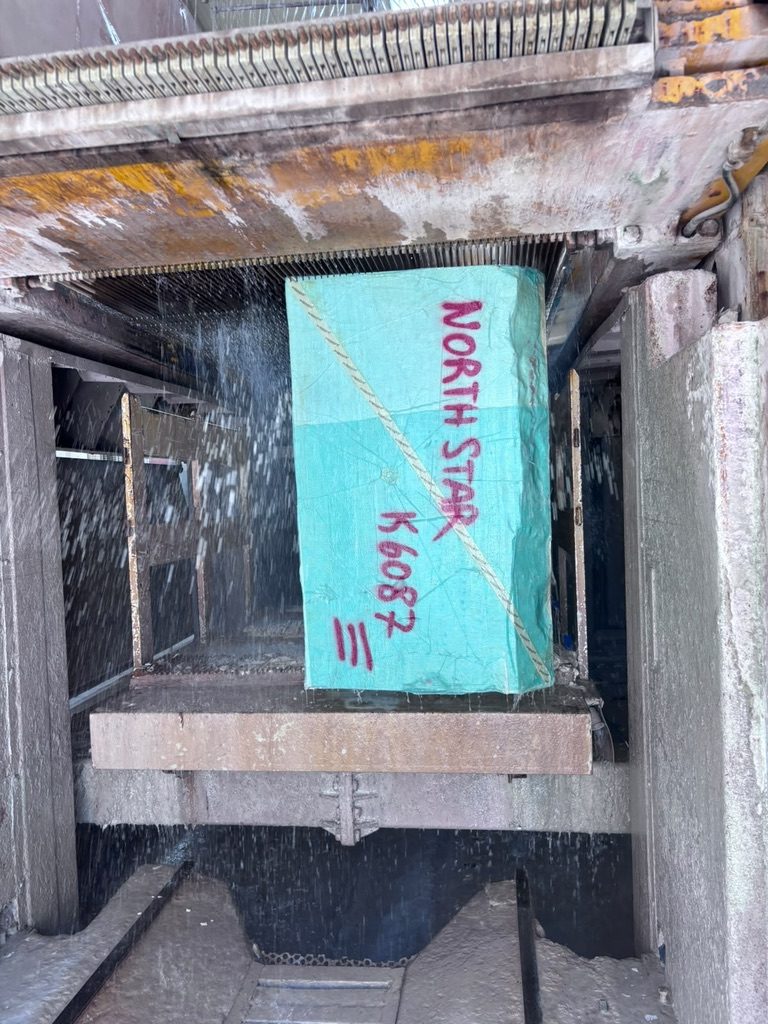
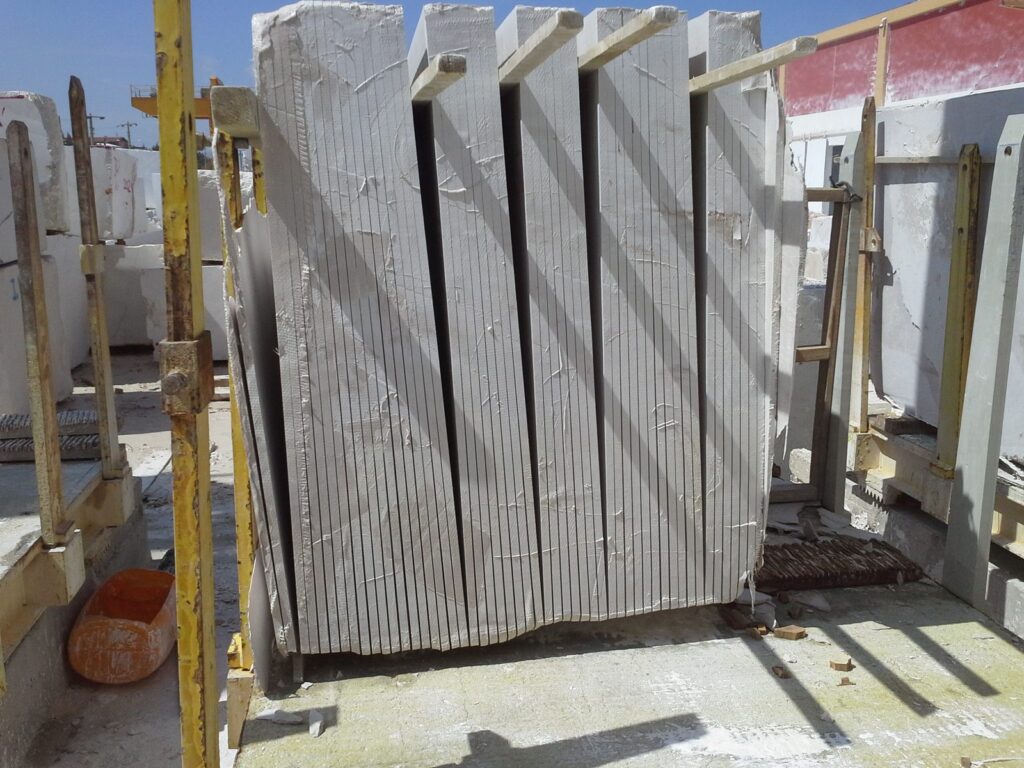
That second point is worth holding onto. A share of the tiles on the market begin as irregular material rather than as full blocks – which is neither good nor bad in itself, but it does explain why tile and slab from nominally the same stone can look different.
7. Reinforcing the Slabs
After the gangsaw the slabs are treated again – epoxy, mesh and gel, in a dedicated oven – so that they can withstand surface processing. Without it, slabs break during polishing or honing and the raw material is wasted.
8. Surface Finishing
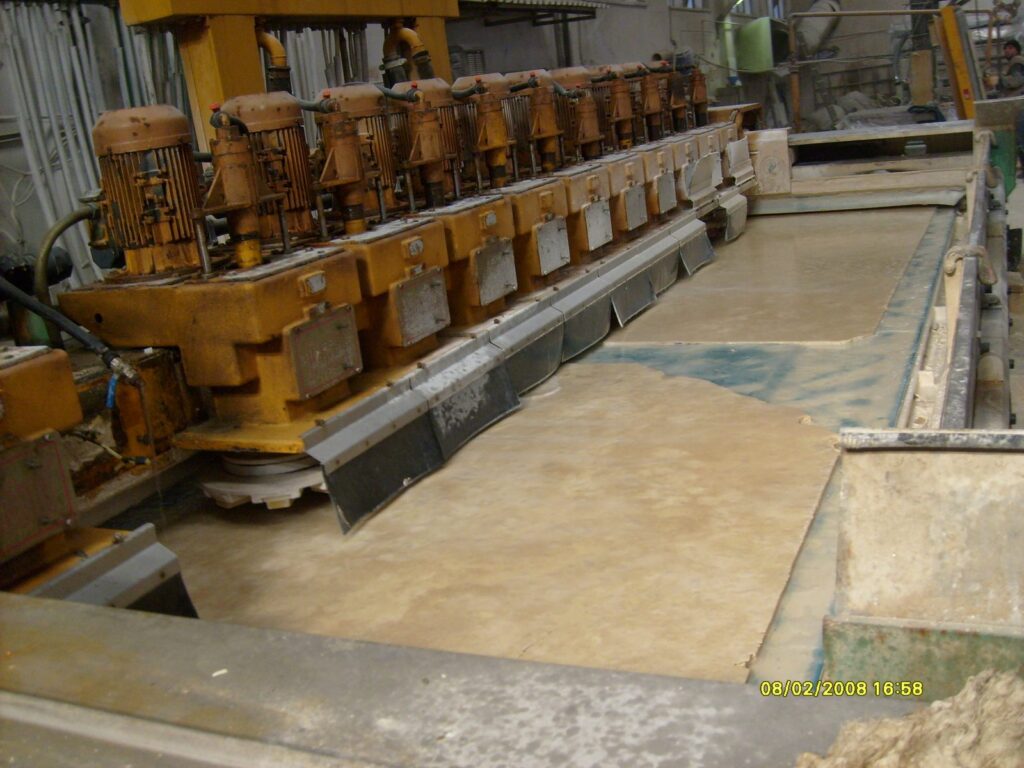
Reinforced slabs go to the polishing and honing line, where abrasives bring the surface to whatever finish has been specified: polished, honed, brushed, or leather.
This is the stage where defects become visible – polishing waves, fine scratches on hard stones honed at low grit, and any repair that was not done properly. It is also where a slab that was inadequately reinforced will finally fail.
9. Two Routes After Finishing
Once the surface is finished, the material can go one of two ways.
It can be cut to size – taken to the trimming line and produced to the dimensions you have ordered. Or it can be bundled as it is and sold as slabs, which is how most large-format and bookmatch material is traded, because cutting it to size at the factory would destroy the vein continuity the buyer is paying for.
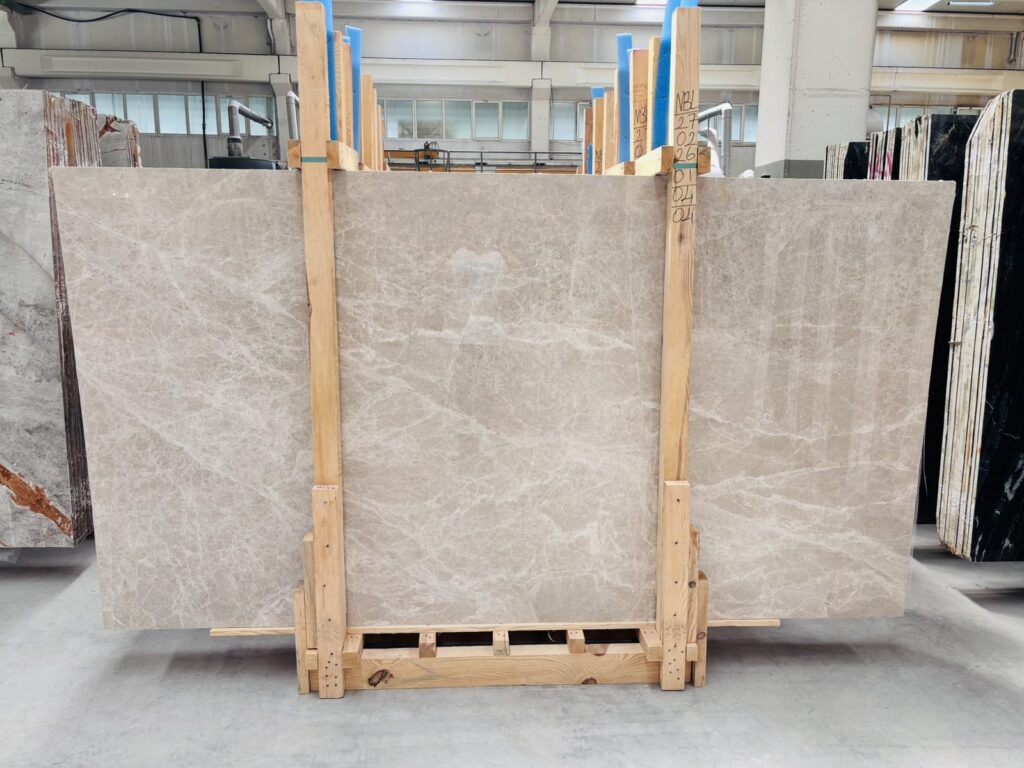
This is a decision for the buyer rather than the factory, and it is worth making deliberately. Cut-to-size ordered from the factory saves fabrication cost at your end; slabs give you flexibility and preserve the sequence, at the cost of handling larger, heavier pieces.
10. Making Tiles from Irregular Blocks
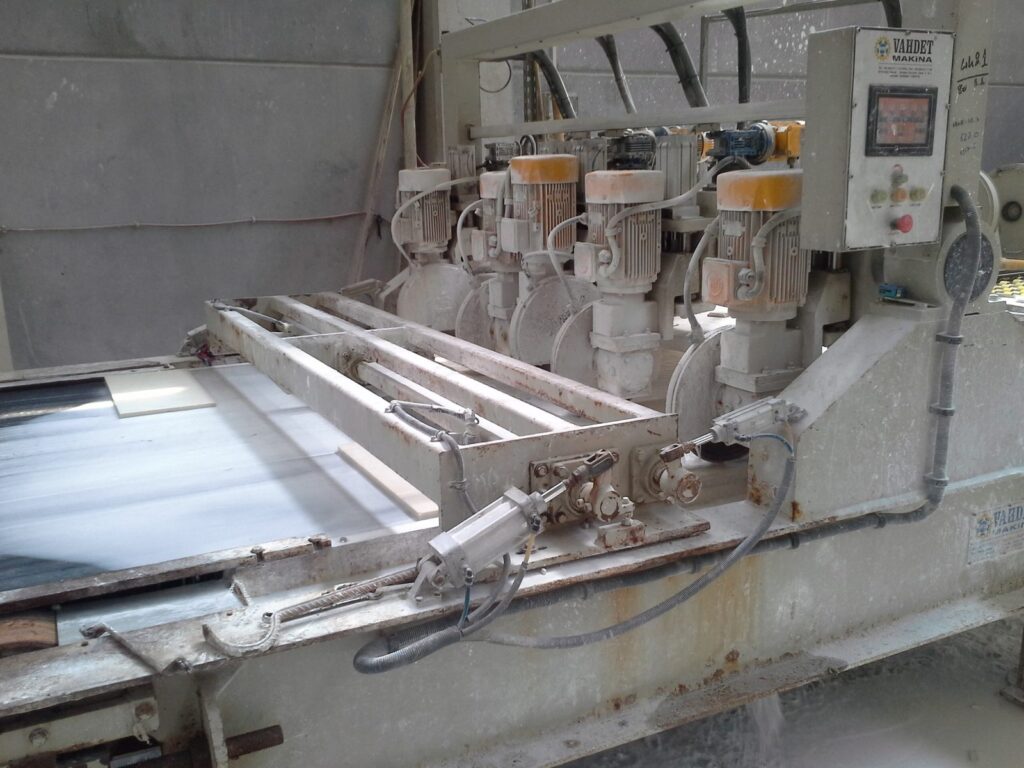
The irregular block line runs in parallel. After the ST machines, the material is split, then calibrated – a machine that removes the thickness variation left by splitting and brings everything to an even gauge.
From there it passes to narrow-band polishing and honing, the last surface operation before the material is cut to size. Sizing is done on trimming machines: two vertical blades cutting the material to the ordered dimension, and the fastest operation in the whole factory.
11. Selection, Packing and Crating
The last stage is human. Someone stands at a table and decides what goes in the crate and what does not – the stage where buyer and supplier most often disagree.
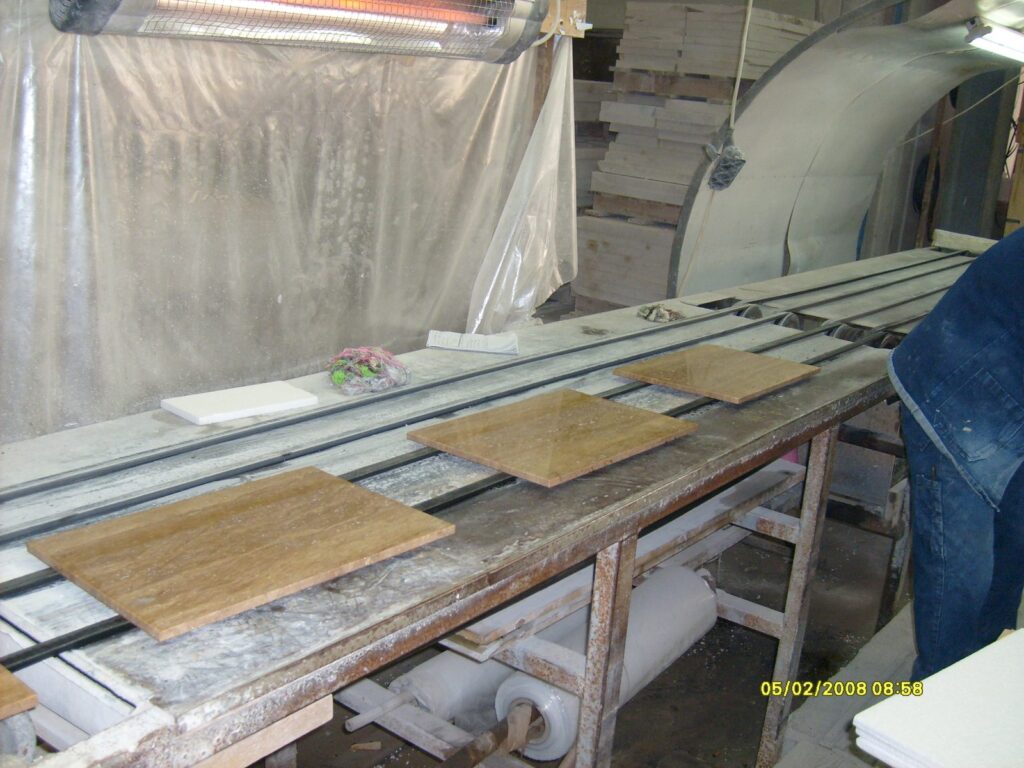
Slabs are packed into bundles built from timber battens. Tiles are graded and crated. Then the container is loaded, and the material begins the part of the journey you actually see. We have set out the packing stage in detail in how marble slabs are packed for export.
Where This Leaves You
The useful thing about knowing the sequence is that it tells you when to intervene. Once a block has been cut badly, no amount of inspection at the port will fix it. Once slabs have cracked on the polishing line, the material is gone.
The points where a buyer can still change the outcome are early: block selection at the quarry, the decision to reinforce, and the selection table before crating. Everything after that is verification rather than control.
If you are buying marble from Turkey and want eyes on the process at those stages, that is what our inspection services exist for. You can also read our slab inspection guide for the checking sequence we follow before a container is loaded.
Why Marble Blocks Are Reinforced with Epoxy and Mesh
How Marble Slabs Are Packed for Export