Classic Light is a light travertine in beige tones from the Denizli region of Turkey. Buyers may ask for it as light travertine, beige travertine, classic travertine or Denizli light travertine (Denizli light traverten in Turkish). This guide explains how the stone forms, the difference between vein cut and cross cut, the pore fill types (cement, mastic and transparent) and the surface finishes.
What Is Travertine and How Does It Form?
Travertine, called traverten in Turkish, is a porous rock that forms at hot springs. Water rich in dissolved calcium rises to the surface and cools, and the calcium is released as calcium carbonate that builds up layer by layer. The layers give the stone its striped look. The small holes and cavities on the surface come from its porous structure.
Denizli is known for its Pamukkale travertines, and a large share of Turkey’s travertine quarries are in the Denizli area. Turkish travertine is exported to markets around the world. Denizli travertines are commonly sold under colour names such as Light and Classic.
Classic Light Travertine: Colour and Names
Classic Light is a light stone with a colour close to beige. Some customers ask for the same stone as “light beige travertine”. Because it is a natural stone, colour and pattern change from slab to slab, so it is best to look at photos of the exact lot before you buy. You can see our other stones on the Products page, or compare light Turkish marbles in our Vanilla Marble Collection guide.
Vein Cut and Cross Cut Travertine
Travertine forms in layers, so the direction in which a block is cut decides how the stone looks. The cutting direction is chosen before the block is cut: each block is planned as vein cut or cross cut, and this cannot be changed afterwards. In general, vein cut is cut across the layers and cross cut is cut parallel to the layers.
Vein Cut
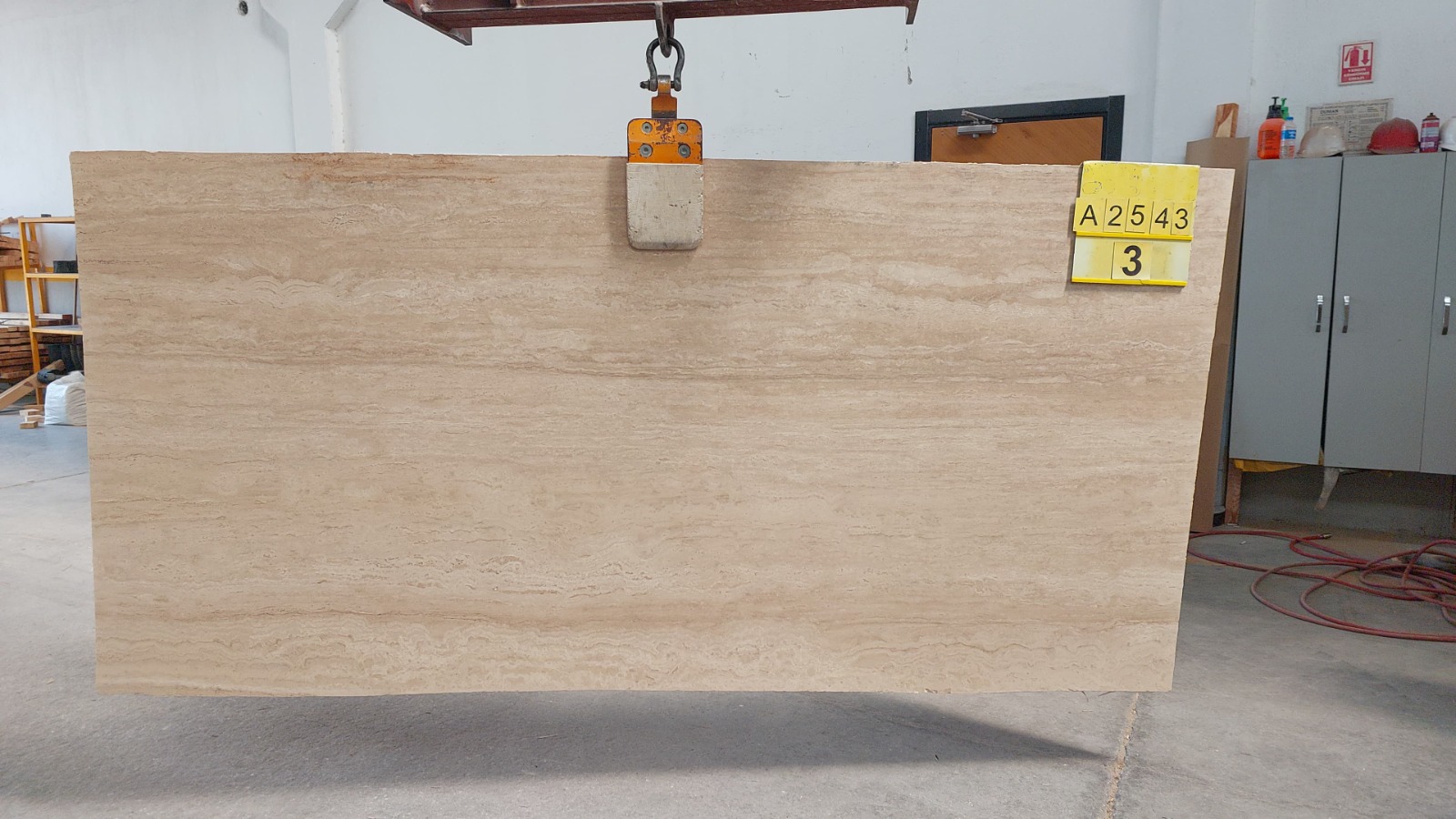
In vein cut, the water channels in the stone show as sharp lines. It is the more distinctive, higher priced option and it catches the eye. Vein cut is used in elegant, prestigious projects. Compared with cross cut, it is more fragile.
Cross Cut
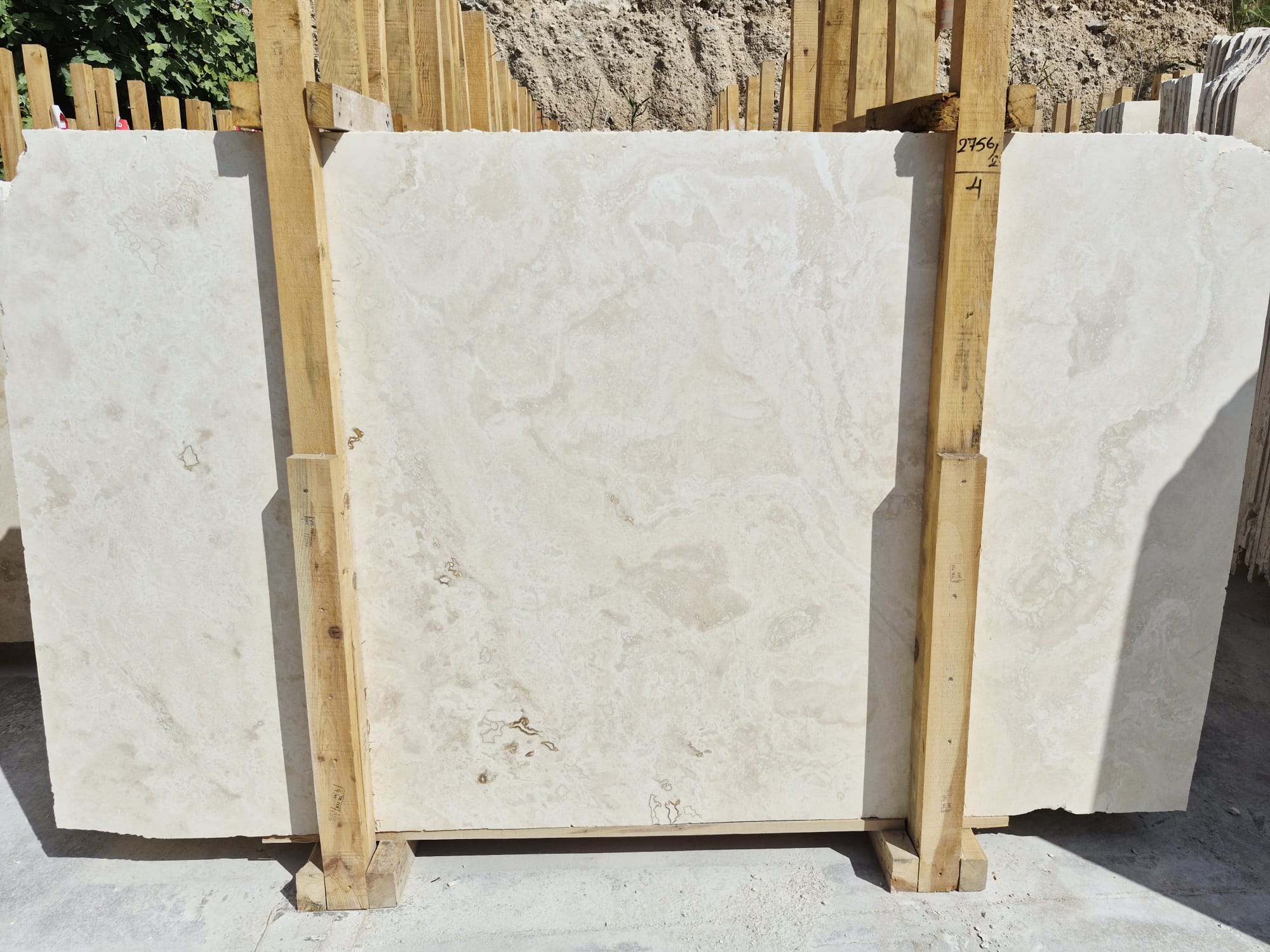
In cross cut, the pattern is wavier and the lines are not as sharp. It suits everyday use: garden decoration, floors and wall cladding. Cross cut is less fragile than vein cut.
For garden use, 3 cm thick travertine is preferred. Because it is thicker, its strength is higher. The porous structure also fits well with garden architecture.
Vein Cut vs Cross Cut at a Glance
| Vein Cut | Cross Cut | |
|---|---|---|
| Pattern | Water channels as sharp lines | Wavier pattern |
| Character | Distinctive, eye-catching | Everyday, practical |
| Typical use | Elegant, prestigious projects | Garden decoration, floors, wall cladding |
| Strength | More fragile | Less fragile |
| Price | Higher | Lower than vein cut |
| Fill options | Cement, mastic, transparent | Cement, mastic |
Pores and the Raw Stone
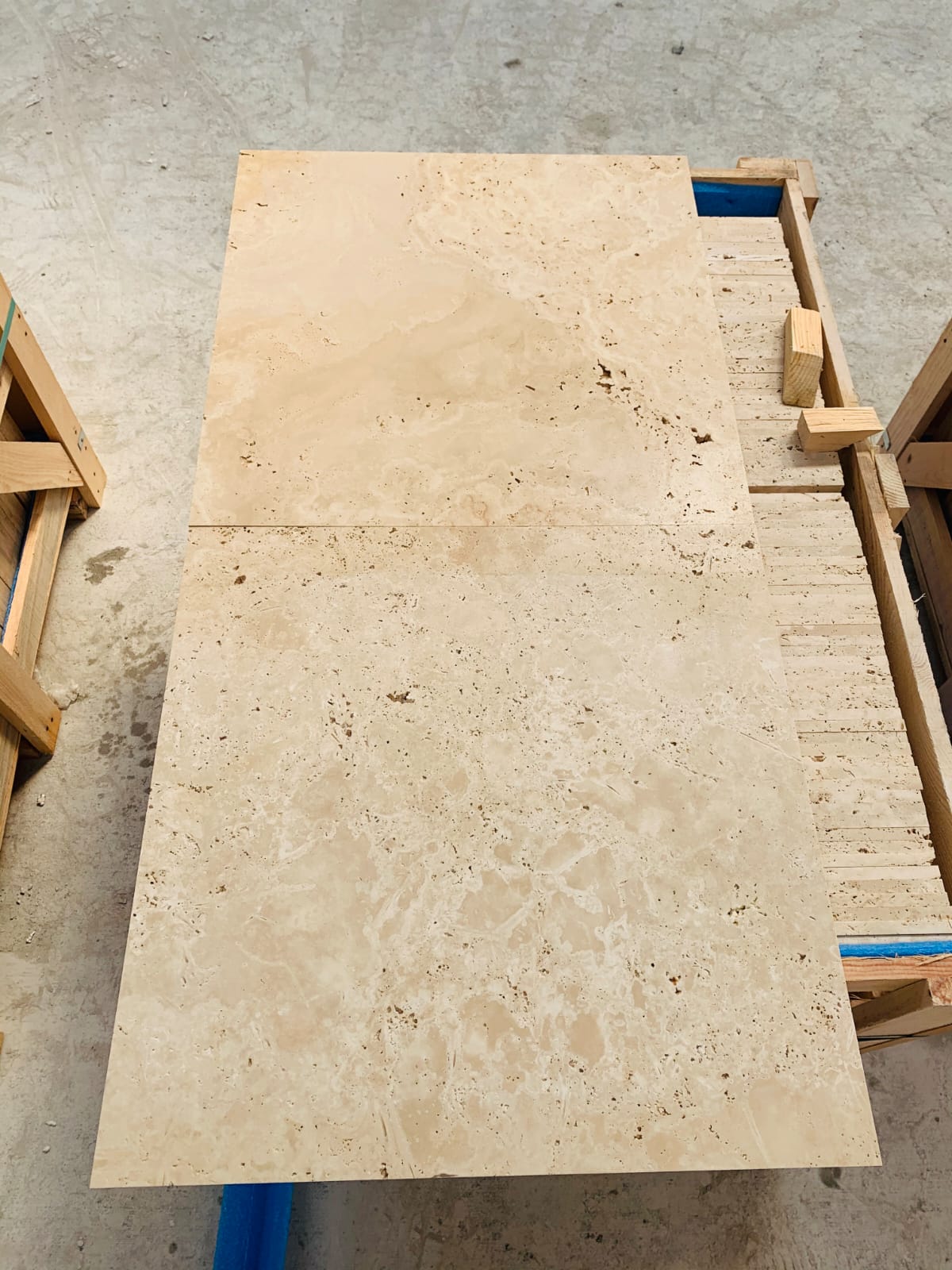
In its raw state, travertine has many open holes on the surface. The photo below shows unfilled tiles. Open pores matter differently depending on the use:
- In garden decoration, the porous structure fits well with the architecture.
- Around pools and in areas where people walk every day, open pores can be a disadvantage.
- On exterior facades, travertine deforms more easily, depending on rain, sun and the load on the stone.
For this reason we fill the pores. The filling material is chosen according to where the stone will be used and the project budget.
Travertine Pore Fill Types: Cement, Mastic and Transparent
Filled travertine has its holes filled before shipping, which gives a smooth, even surface. Unfilled travertine keeps its holes and its textured surface. We work with three fill types. Mastic and transparent fills are epoxy (resin) based. The fill is chosen according to the place of use and the project budget.
| Fill | Vein Cut | Cross Cut |
|---|---|---|
| Cement fill | Used | Used |
| Mastic fill | Used | Used |
| Transparent fill | Used | Not used |
Cement Fill
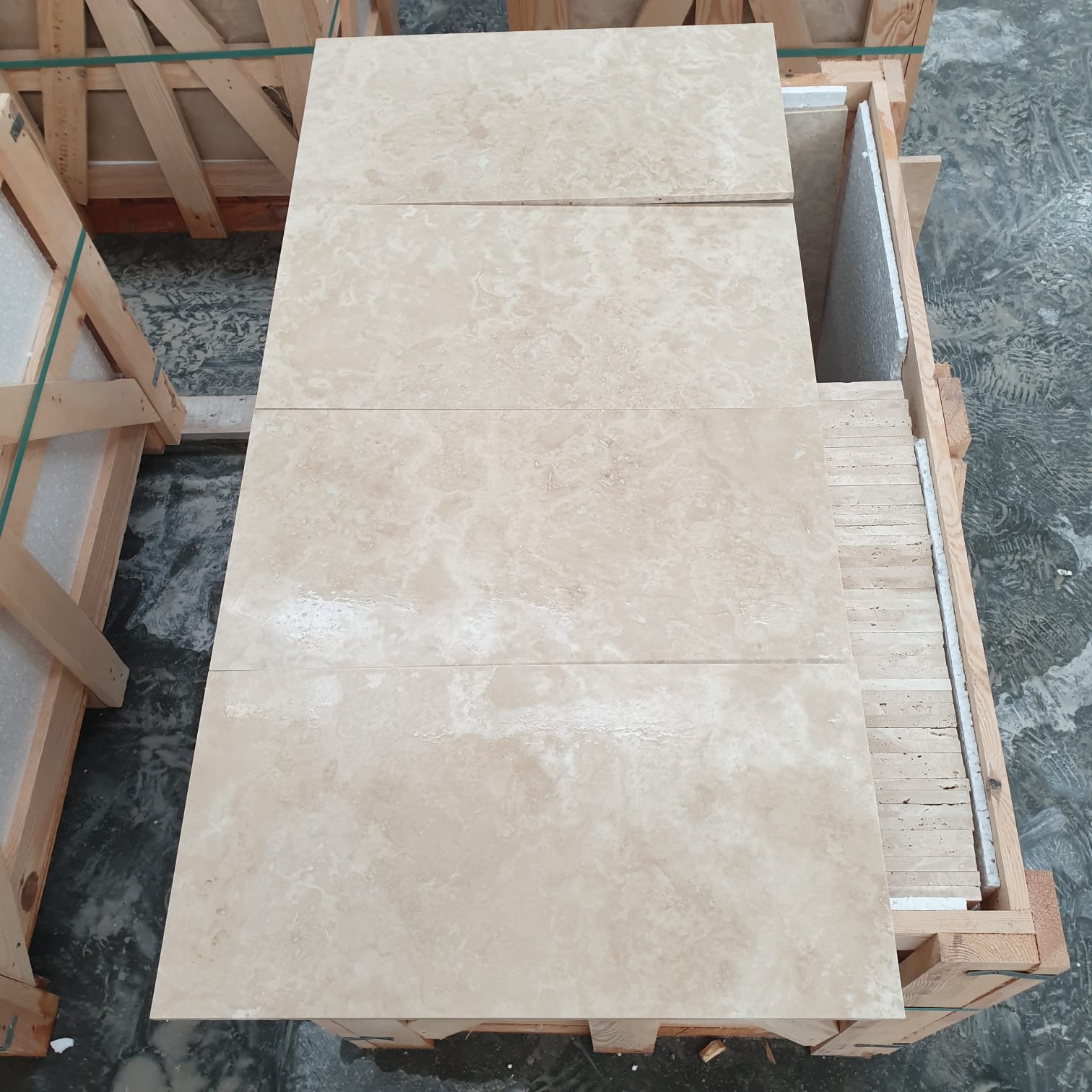
The pores are closed with a cement fill. It is used on both vein cut and cross cut products.
Mastic Fill
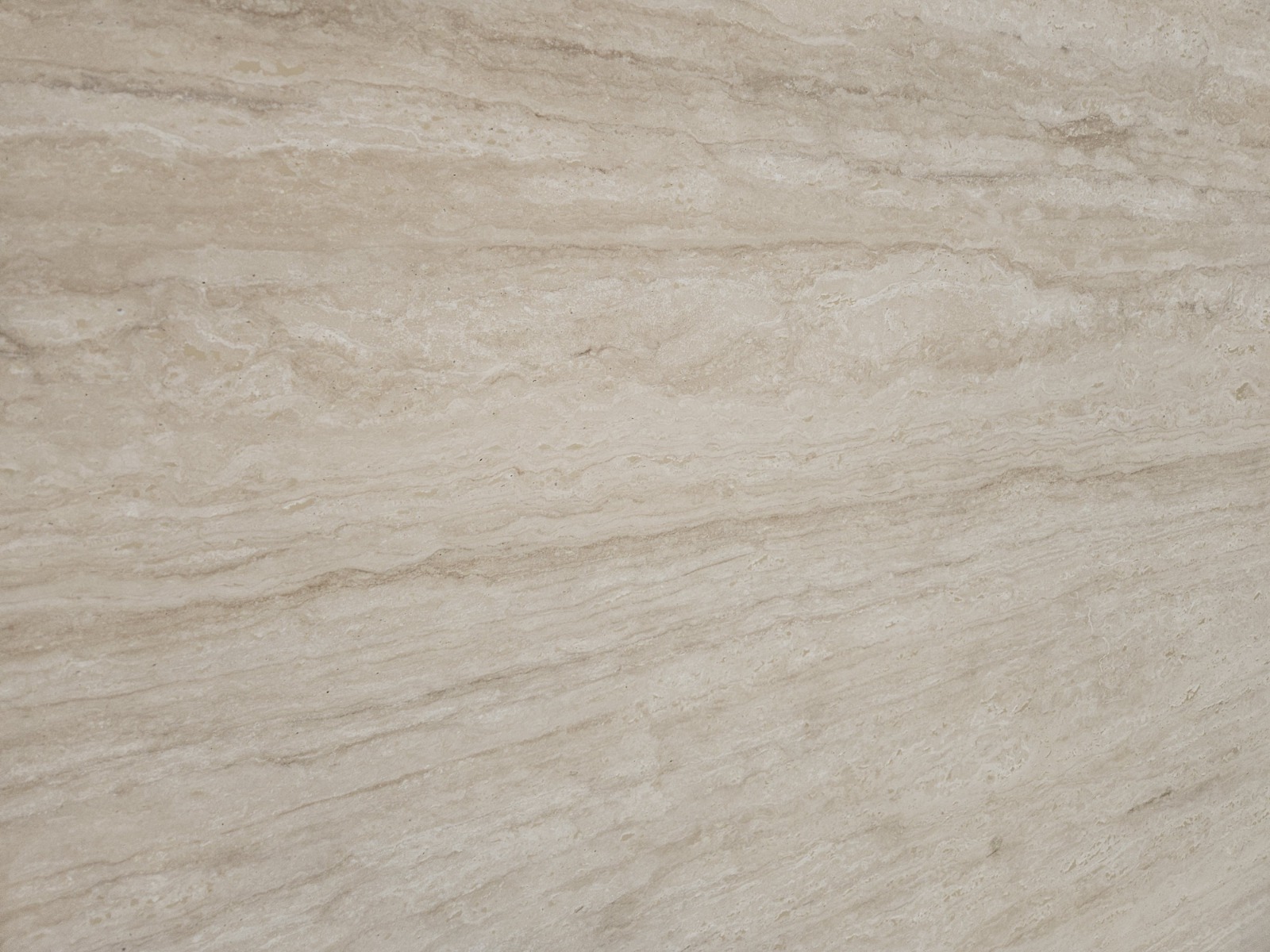
Mastic is a coloured, epoxy-based fill. It is used on both vein cut and cross cut products. The important point is the colour that the mastic takes after it dries. For this reason, mastic recipes are prepared by trial and error: samples are made and left to dry, and the recipe that gives the best colour match after drying is used.
Transparent Fill
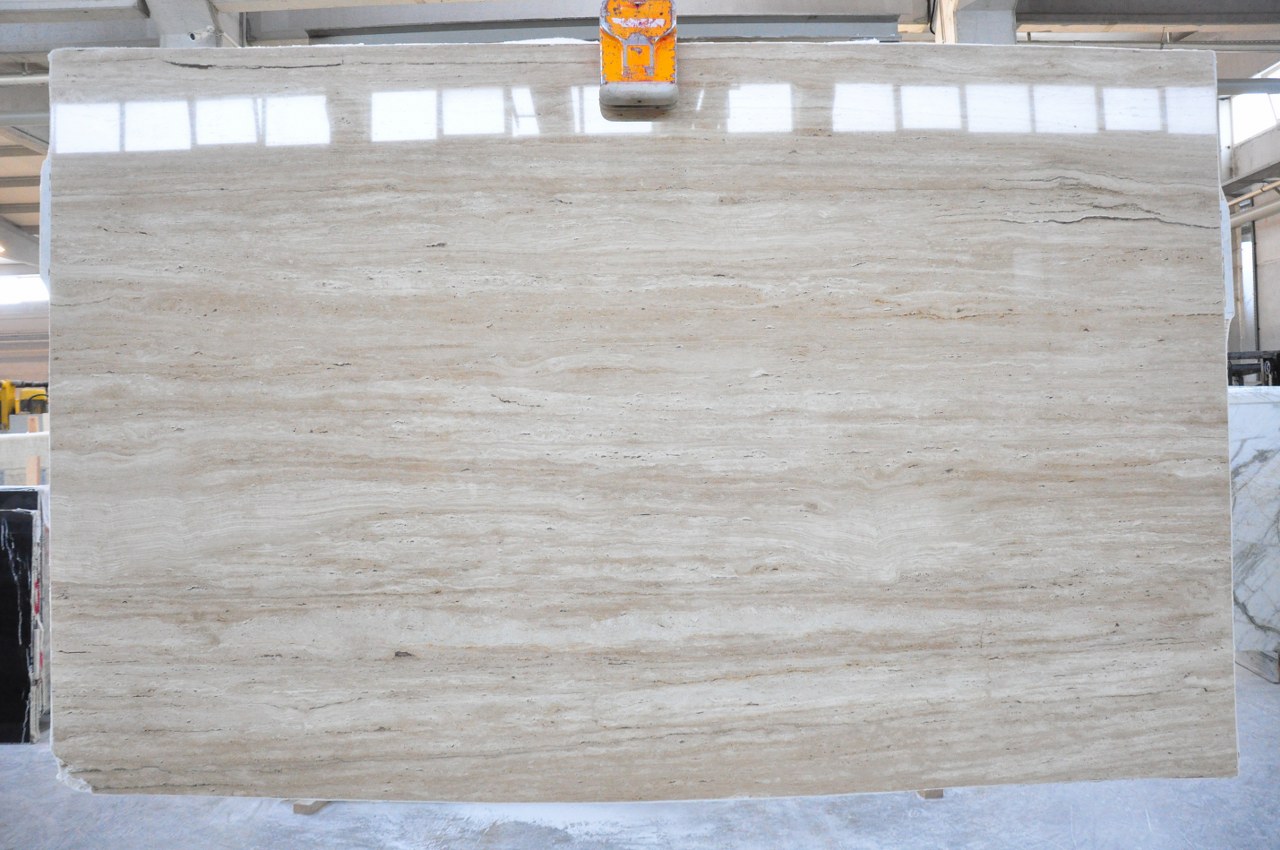
Transparent fill is a clear, epoxy-based fill. It is used only on vein cut, not on cross cut. The important point is to use a good fill material, because the fill should not turn yellow after some time.
Travertine Surface Finishes
The common surface finishes for travertine are:
- Honed: The surface is ground smooth. It has a matte, natural look and is used indoors and outdoors.
- Polished: The surface is glossy and can be slippery when wet, so it suits dry indoor areas better.
- Brushed: The surface is worked with wire brushes and has a matte, textured, aged look. It helps reduce slipping.
- Tumbled (antique): See below.
Tumbled (Antique) Finish
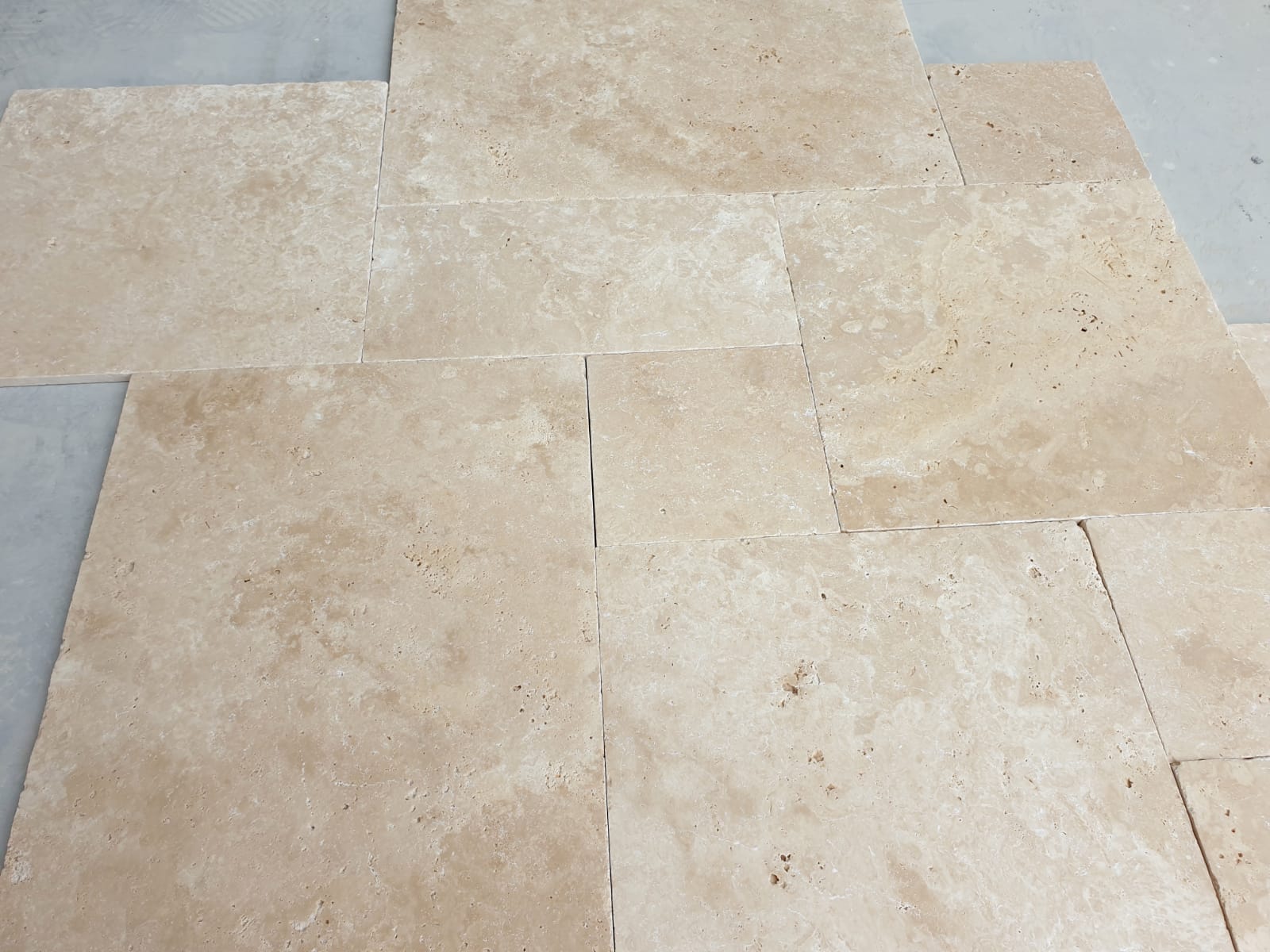
In the tumbled finish, the tiles are rotated in large drums with abrasives and water. The edges become rounded, the surface turns matte and grippy, and the stone gets an aged look. Tumbled products are usually left unfilled, so they keep their natural holes. Because the finish reduces slipping, it is chosen for pool edges, gardens, terraces and paths.
Where Is Classic Light Travertine Used?
| Area | Thickness | Notes |
|---|---|---|
| Wall cladding | 1.2 cm | Tiles are preferred. Vein cut or cross cut. |
| Floors | 1.2 cm | Possible, but the concrete base must be levelled very carefully. |
| Garden | 3 cm | Cross cut for everyday use. Tumbled, unfilled products can also be chosen. |
| Pool edges | – | Dense, low-porosity travertine. Surface usually brushed or tumbled. |
| Elegant projects | – | Vein cut. |
Wall Cladding
For wall cladding, 1.2 cm thick travertine tiles are usually preferred. Both vein cut and cross cut can be used on walls.
Floors
The 1.2 cm thickness can also be used on floors. In this case the concrete base must be levelled very carefully. Any unevenness in the concrete can cause the travertine to crack after installation.
Garden Decoration
For everyday use in the garden, cross cut travertine in 3 cm thickness is preferred. The higher thickness gives higher strength. If a natural, open-pored look is wanted, tumbled and unfilled products can be chosen.
Pool Edges
Dense, low-porosity travertines are preferred around pools. To reduce slipping, the surface finish is usually brushed or tumbled.
Elegant and Prestigious Projects
Vein cut is used in more elegant, prestigious projects. Its sharp water channel lines make it an eye-catching choice.
Frequently Asked Questions
Are light travertine, beige travertine and Denizli light traverten the same stone?
Buyers may ask for Classic Light as light travertine, beige travertine, classic travertine or Denizli light travertine (Denizli light traverten). The colour is light, in beige tones. As a natural stone, colour and pattern change from slab to slab.
What is the difference between vein cut and cross cut travertine?
In vein cut, water channels show as sharp lines, and the product is more elegant and more fragile. In cross cut, the pattern is wavier, and the product suits everyday use and is less fragile. The cutting direction is decided before the block is cut.
Which thickness is used for walls, floors and gardens?
For wall cladding, 1.2 cm tiles are preferred. 1.2 cm can also be used on floors if the concrete base is levelled very carefully. In gardens, 3 cm is preferred.
Which travertine is used around a pool?
Dense, low-porosity travertine is preferred around pools. To reduce slipping, the surface is usually brushed or tumbled.
Filled or unfilled travertine?
The fill is chosen according to the place of use and the project budget. Cement and mastic fills are used on both vein cut and cross cut, and transparent fill is used only on vein cut. Mastic and transparent fills are epoxy based. Tumbled products are usually left unfilled.
Request Photos and Pricing
Tell us the cut (vein cut or cross cut), the fill type, the surface finish, the thickness, where the stone will be used and your budget. Shipping is FOB Izmir. To ask for photos and pricing, please contact us or message us on WhatsApp.
For stones that are ready to ship, see the Ready to Ship page. To check quality before loading, see our slab inspection and tile inspection services.

Vanilla Marble Collection: Vanilla White, French Vanilla and Vanilla Ice
Turkish Travertine from Denizli: Slabs, Tiles and French Pattern Sets